
CLIENT
Reply for an International mobility brand
SERVICES
Analysis & Research, Workshops Service Design
TIMELINE & STATUS
Started January 2024, presented to the client on July 2024
Overview
Led UX research and service design for an international mobility company's new smart e-bike product line, focusing on urban market segments including both Pedelec and S-Pedelec categories. The project aimed to identify connectivity opportunities and define user-centered features for the competitive e-mobility landscape. I worked with the Reply connect design team with Andrea Neri and Andrea Fenaroli.
My Role
UX Researcher & Service Designer
Conducted comprehensive market research across European, US, and Asian markets
Facilitated collaborative workshops with cross-functional teams
Defined feature prioritization frameworks and user journey mapping
Created visual documentation and strategic alignment materials
The Challenge
The client needed to:
Identify market gaps in the rapidly evolving smart e-bike sector
Define connectivity features that would differentiate their product line
Align stakeholders across design, technical, and business teams on strategic direction
Balance innovation with feasibility within mid-market price positioning
The Process
Understand and analyze
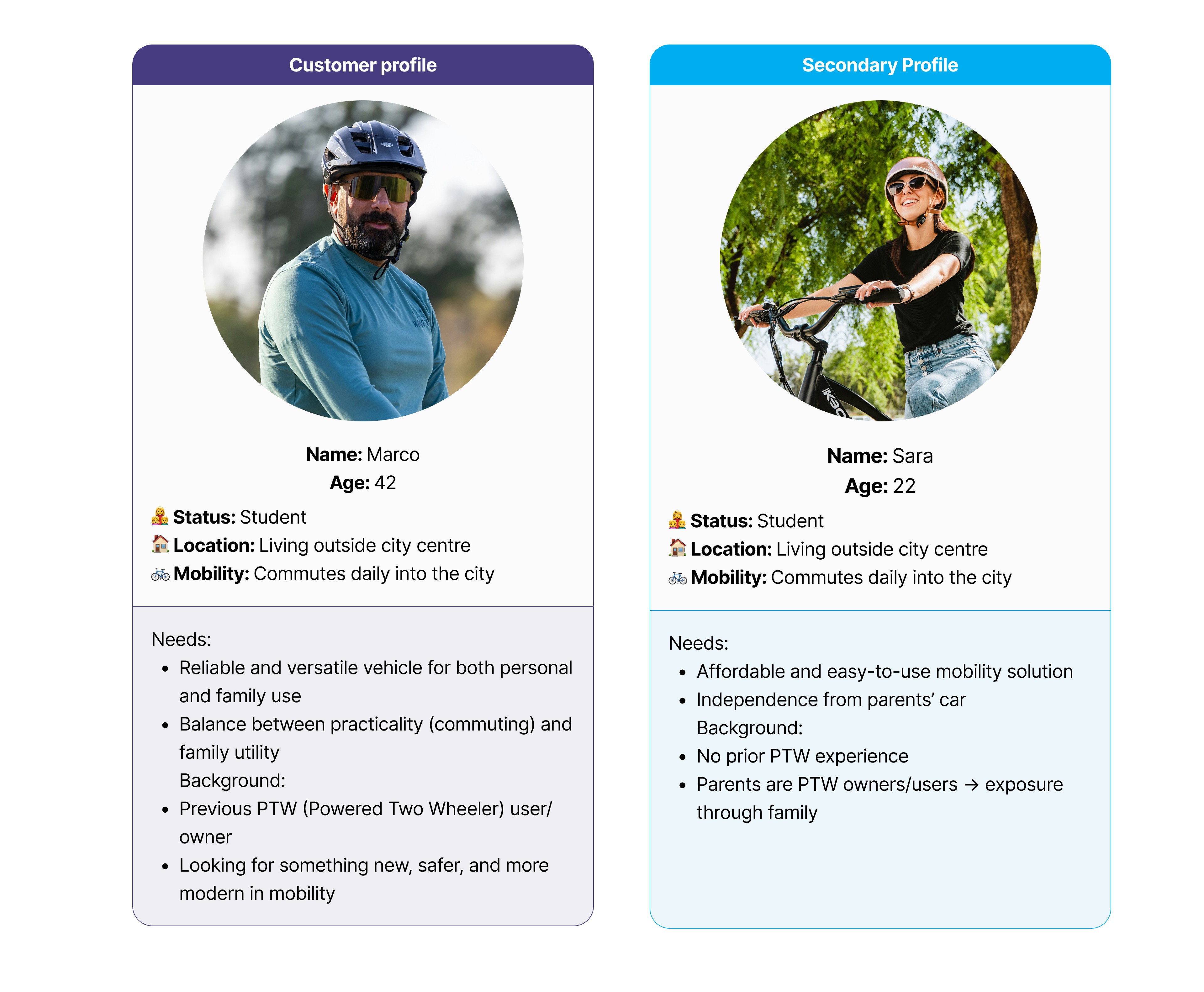
Targeted the research with a specific primary customer profiles identified by the client
Established three core drivers: Fun, Accessibility, Versatility
Created user journey flows and interaction scenarios
Market Research & Competitive Analysis
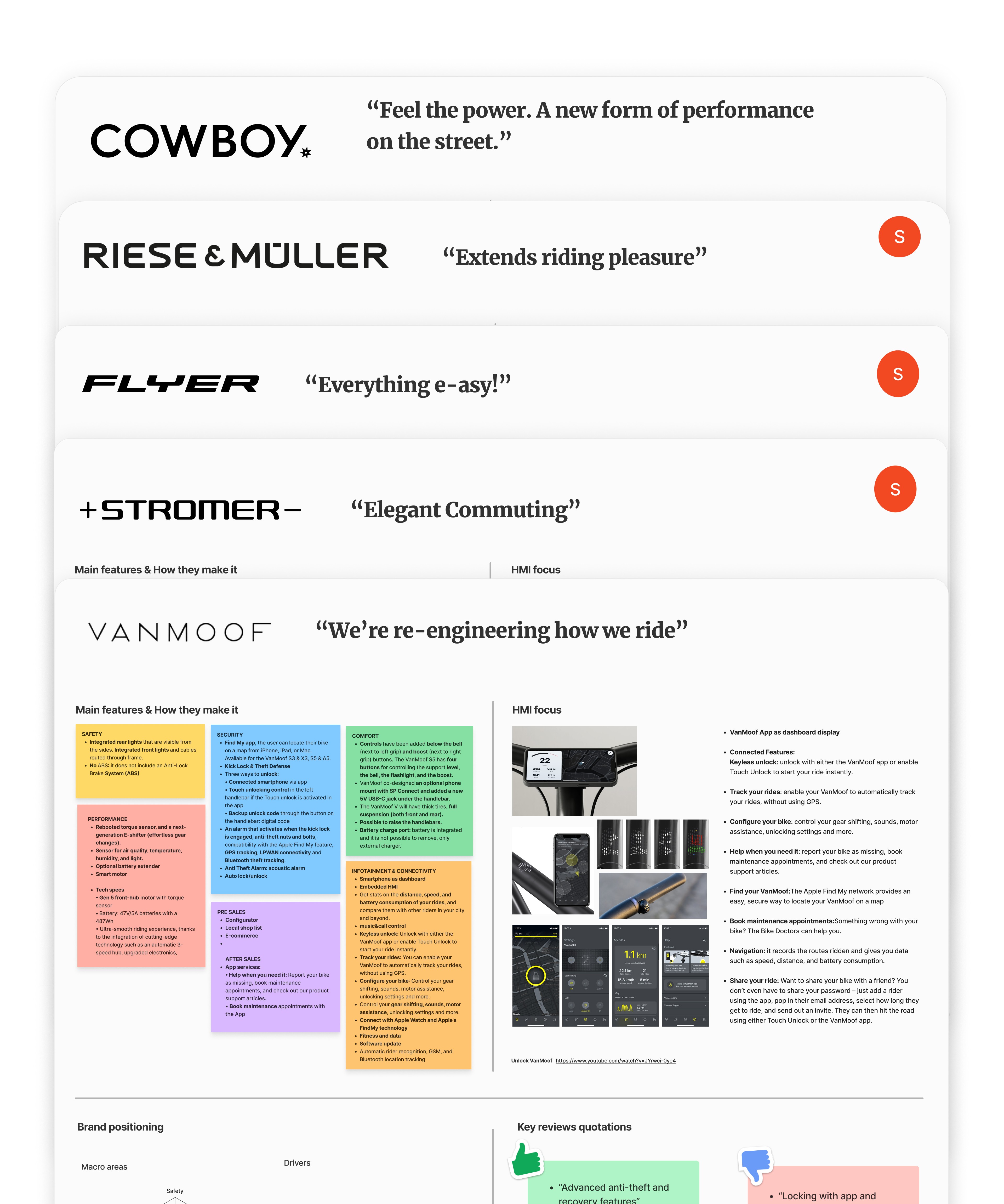
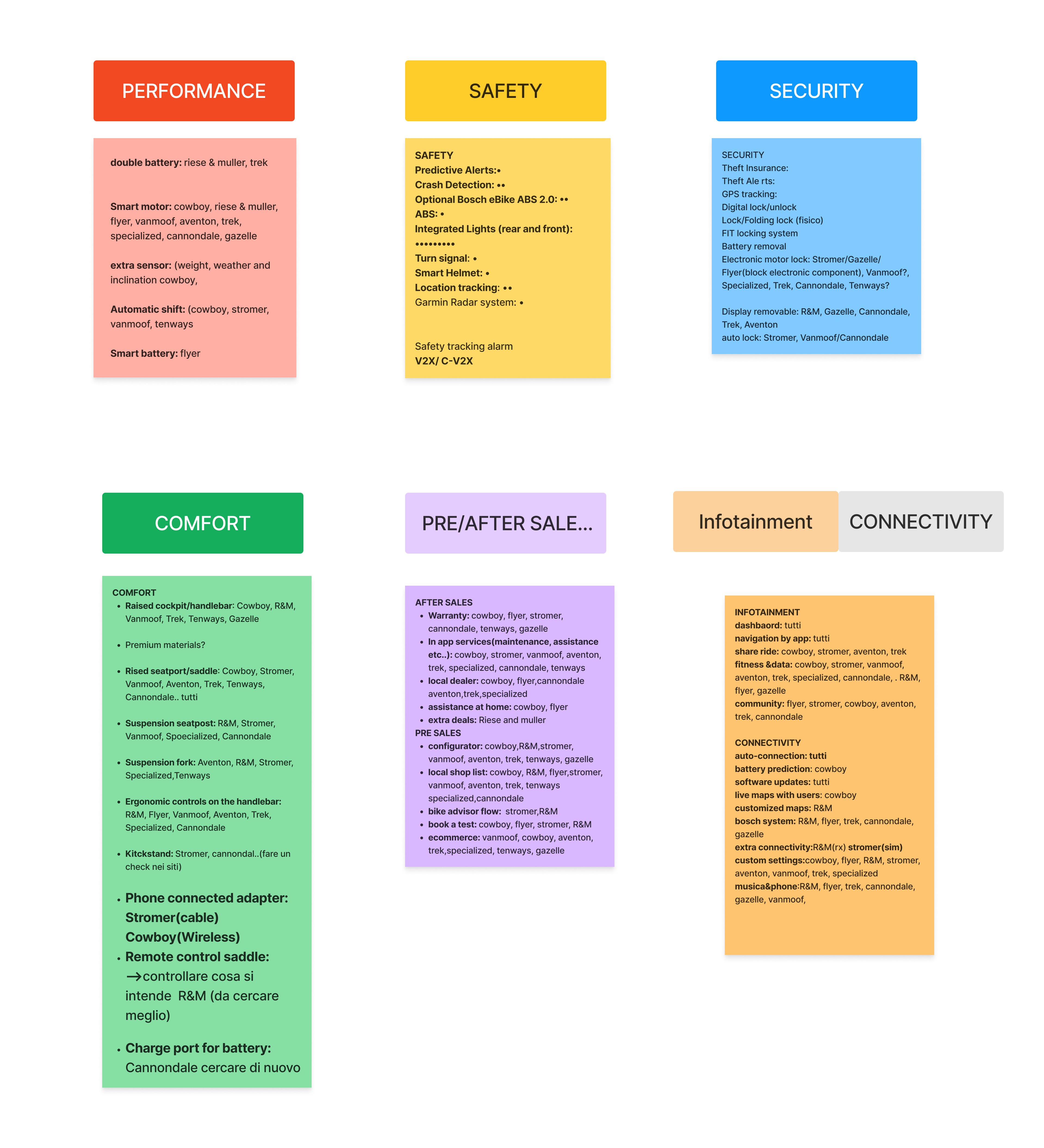
Analyzed 16 key competitors and 34 e-bike models (22 Pedelec + 12 S-Pedelec)
Mapped feature distribution across 6 functional areas: Safety, Security, Comfort, Performance, HMI & Connectivity, Pre/After Sales
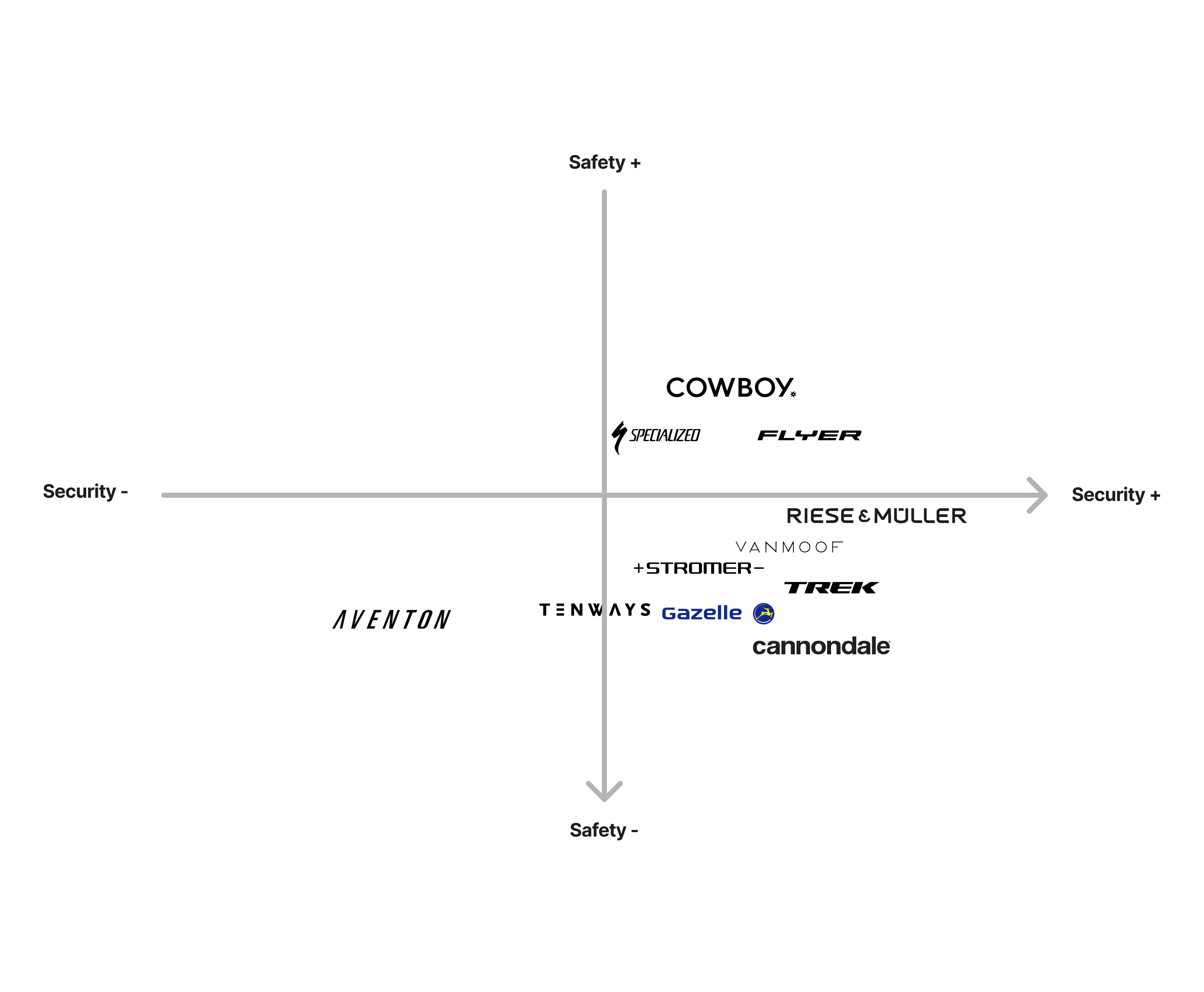
Identified market positioning gaps and opportunities for differentiation
3. Collaborative Workshop Facilitation
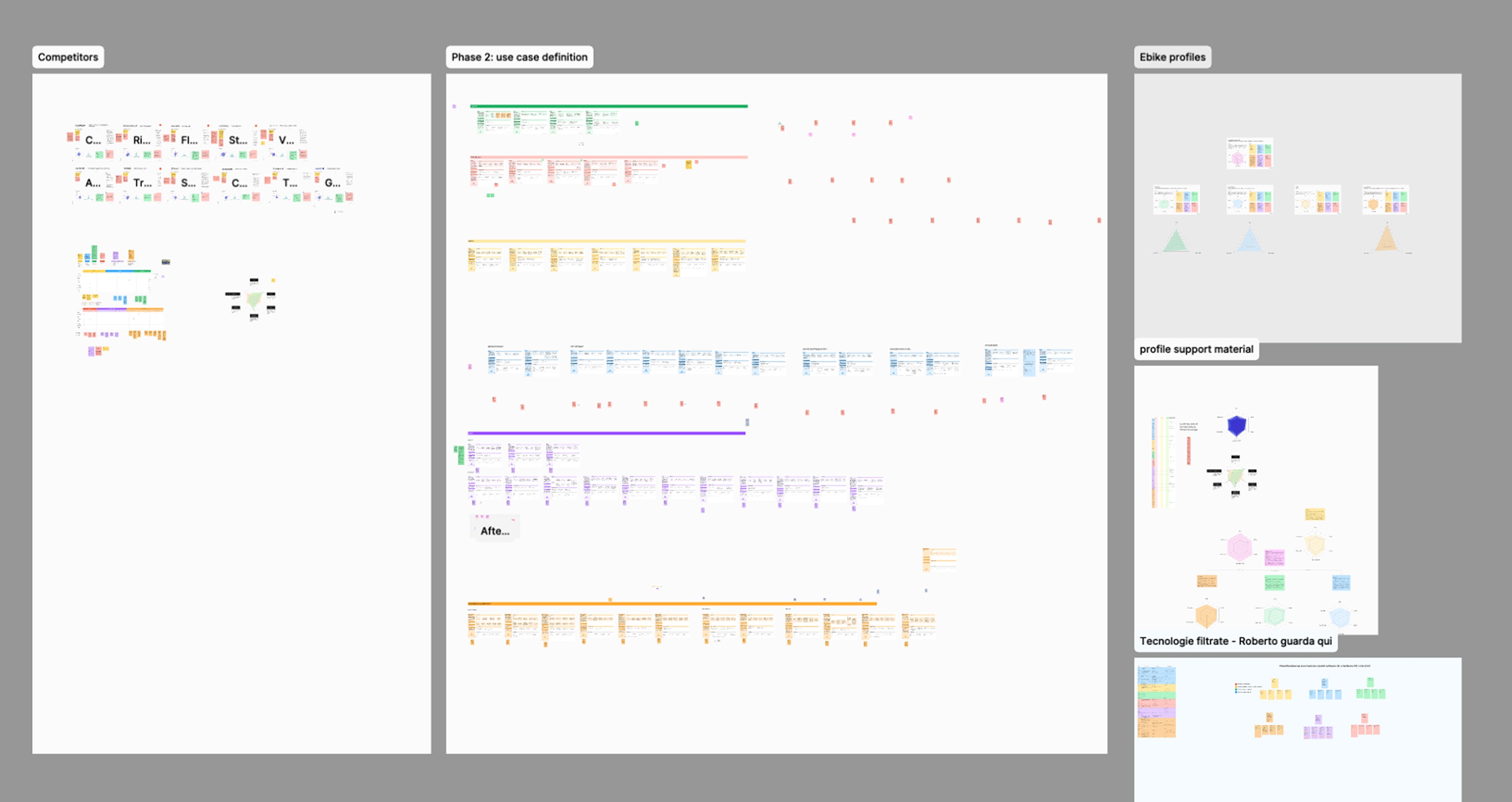
Led 5+ stakeholder alignment sessions using FigJam boards
Generated and prioritized use cases through iterative collaboration
Translated business requirements into technical specifications
4. Use Case Development & Feature Prioritization
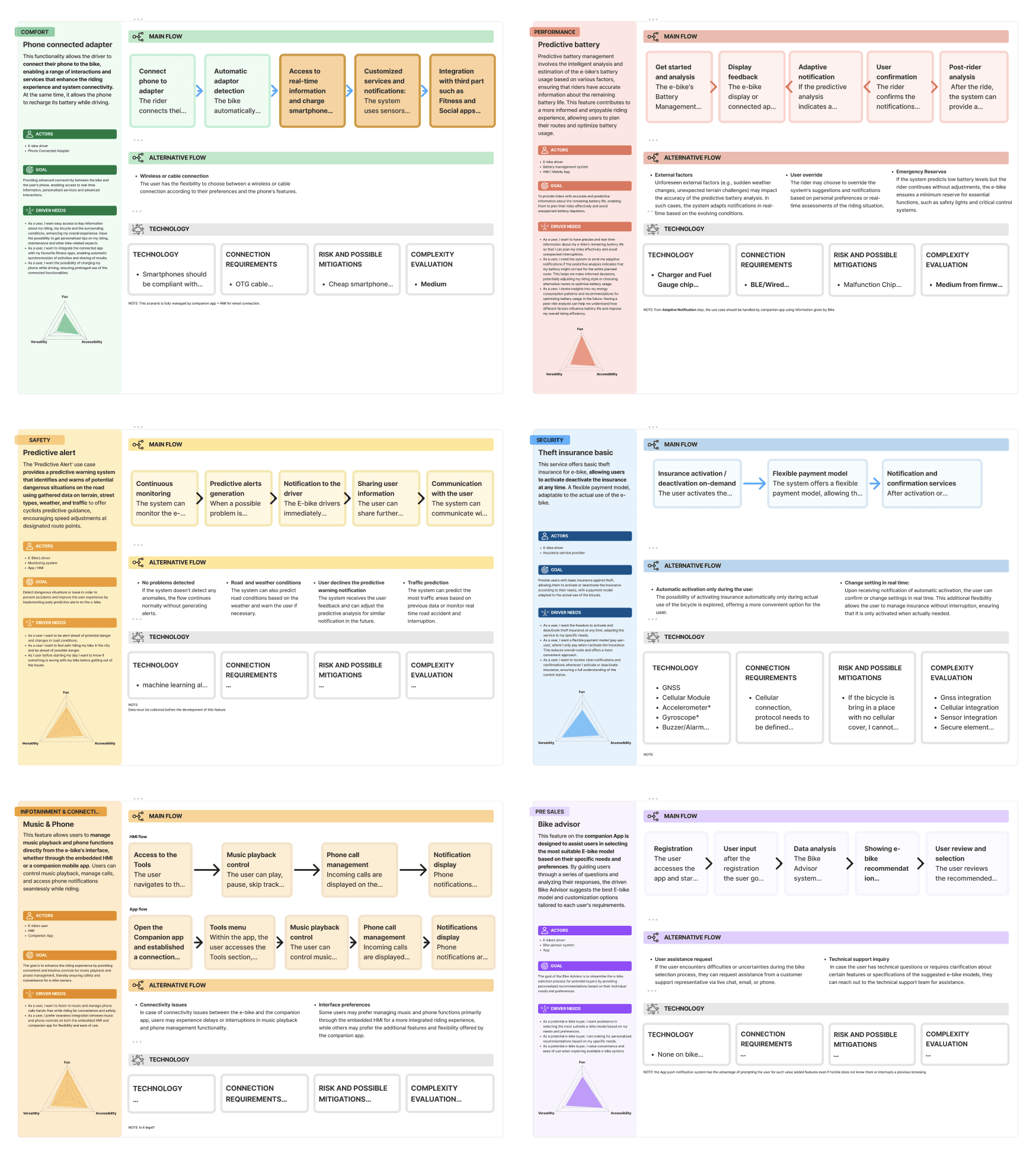
Developed 56 detailed use cases across all functional areas
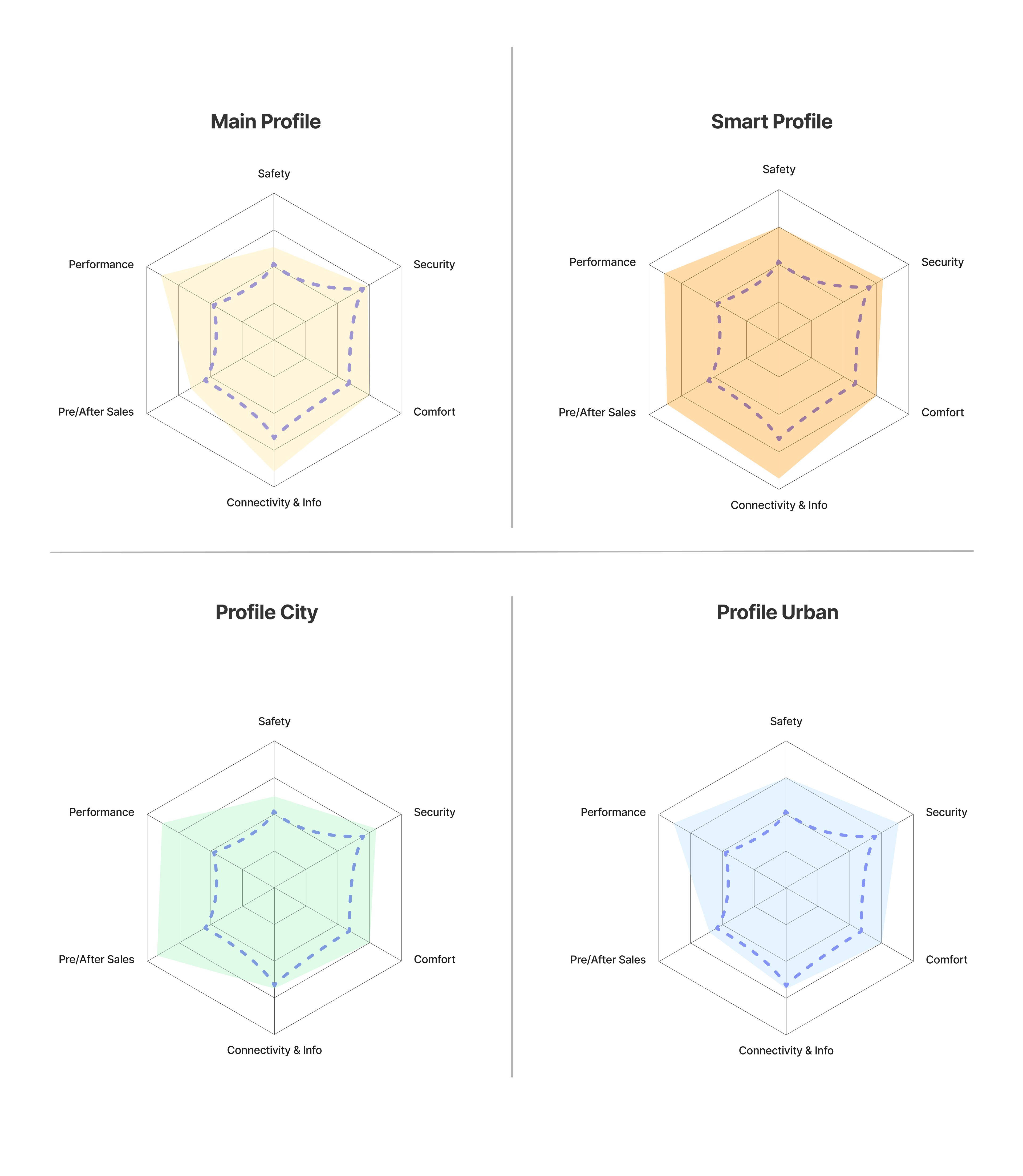
Created 5 distinct e-bike user profiles: Main baseline, City Cruiser, Urban Defender, Smart Commuter, and All-round Smart Connected
Defined feature hierarchies and implementation roadmaps
The Solutions
Strategic Product Definition
Main Profile: Established baseline feature set emphasizing performance, connectivity, and safety
Market Differentiation: Identified opportunities in underexplored areas like V2X integration and predictive maintenance
Scalable Architecture: Created modular feature framework allowing for multiple product variants
Key Innovation Areas
Safety-First Approach: V2X communication, predictive alerts, crash detection systems
Connected Services: Cellular connectivity, OTA updates, cloud-based telemetry
Smart Maintenance: Predictive diagnostics, certified maintenance history, remote assistance
Stakeholder Alignment
Delivered comprehensive documentation including use case sheets, technical requirements, and user journey maps
Established shared vocabulary and priorities across design and engineering teams
Created visual frameworks for ongoing product development decisions
Impact & Results
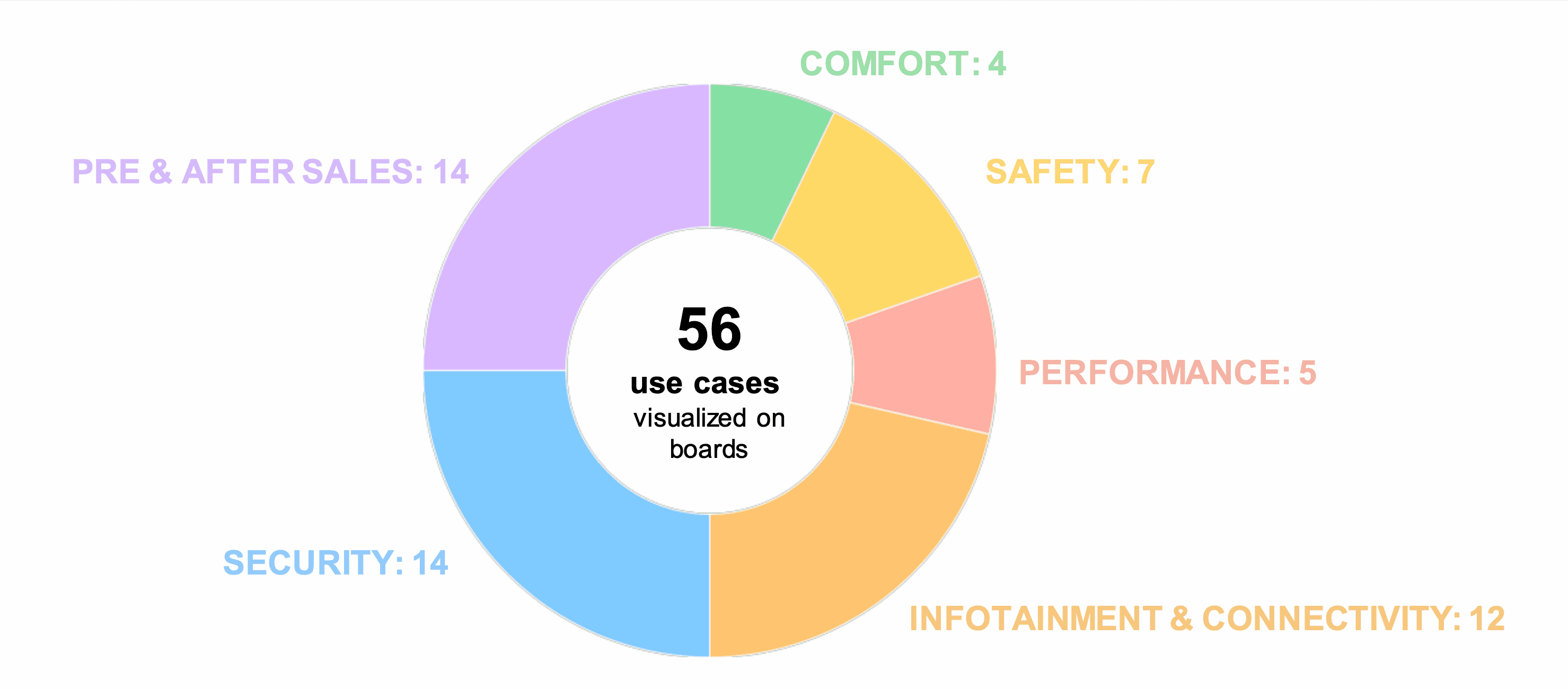
56 prioritized use cases providing clear development roadmap
Strategic market positioning identifying competitive advantages in safety and connectivity
Cross-team alignment enabling efficient progression to development phase
Scalable framework supporting multiple product variants and future expansion
Key Takeaways
This project reinforced the importance of:
Research-driven innovation: Deep market analysis reveals genuine opportunities beyond obvious features
Collaborative design process: Complex B2B projects require intensive stakeholder alignment to succeed
Systems thinking: Connected mobility requires understanding interdependencies between hardware, software, and services
Strategic communication: Visual documentation and workshop facilitation are crucial for translating research into actionable product strategy